We For You

Grow · Family & Parenting

Family & Parenting

Stronger relationships begin at home.

Family life can bring some of our greatest joy — and some of our hardest moments. There are seasons when home feels settled and connected. There are others when the smallest conversation becomes an argument, a child seems distant, parents disagree about what to do, screens become a constant battle, or everyone simply seems exhausted. Good family life is not about creating a perfect home. It is about learning to understand one another, building connection, setting healthy boundaries, repairing when things go wrong and knowing when a family needs more support. Family & Parenting brings together practical guidance, learning, activities and support to help families grow together.

A mother and father sharing a bright garden afternoon with their children, seen from behind

Start with today

What’s happening at home?

Sometimes you don’t need another parenting theory. You need help with what is happening today. Maybe your child isn’t listening. Maybe every request turns into an argument. Maybe your teenager barely talks to you anymore. Maybe you and your partner completely disagree about discipline. Maybe you’re constantly shouting and regretting it afterwards. Or perhaps nothing is seriously wrong — you simply want to build a healthier family before problems begin. Start with what feels most relevant to your family.

These are starting points, not assessments or diagnoses.

My child isn’t listening→

Pause before repeating the instruction. Notice whether the request was heard, understood and realistic for this moment.

One thing to try

Move closer, make calm contact and give one clear request.

Continue from here
We’re constantly arguing→

Repeated arguments can become a pattern in which everybody prepares to defend themselves rather than listen.

One thing to try

Choose a calmer time and begin with: “Help me understand what keeps happening between us.”

Continue from here
My teenager is pulling away→

Growing independence can look like distance. Boundaries still matter, and so does becoming someone they can approach.

One thing to try

Create one conversation this week that is not about performance or problems.

Continue from here
Screens are becoming a battle→

Technology is part of family life, not only a child problem. Rules work better alongside adult modelling and shared conversation.

One thing to try

Discuss one family technology agreement that applies fairly across the home.

Continue from here
My child seems worried or overwhelmed→

A change in behaviour can have many meanings. Listen without rushing to label, diagnose or fix.

One thing to try

Ask what has felt hardest lately, then consider appropriate professional support if concerns persist.

Continue from here
School is becoming difficult→

School difficulties may involve learning, relationships, health, confidence or pressures beyond what is visible at home.

One thing to try

Write down what has changed and speak with your child and school without assuming a cause.

Continue from here
Siblings keep fighting→

Conflict between siblings needs boundaries, but comparison and fixed labels can deepen resentment.

One thing to try

Separate the immediate conflict, then hear each child without deciding who they are as a person.

Continue from here
We’re struggling with boundaries→

Warmth and limits belong together. A clear boundary should teach rather than humiliate.

One thing to try

Choose one boundary and make it clear, age-appropriate, proportionate and consistent.

Continue from here
I keep losing my temper→

The moment after shouting matters too. Responsibility and repair can sit alongside the original boundary.

One thing to try

Pause, return and name what you need to take responsibility for.

Continue from here
We parent very differently→

Different strengths can complement one another, but children should not have to carry unresolved adult conflict.

One thing to try

Discuss one shared principle away from the children where possible.

Continue from here
Our family is going through change→

Separation, bereavement, moving, illness and other changes can affect each family member differently.

One thing to try

Name what is changing, what is staying steady and where more support may be needed.

Continue from here
I feel exhausted as a parent→

Parenting advice can sound like another demand when you are already carrying too much.

One thing to try

Notice one pressure that needs practical help, rest or shared responsibility rather than more self-criticism.

Continue from here
I want to strengthen our family→

Families do not have to wait for a crisis to become more connected.

One thing to try

Choose one ordinary shared experience and protect time for it this week.

Continue from here

Understand → Connect → Communicate → Guide → Repair → Grow Together

Understand

Building the home from the inside out

Before we try to change behaviour, it helps to understand the family around it.

A family is more than a collection of individuals living under the same roof.

We affect one another.

A stressed parent can change the atmosphere of a home. Conflict between adults can affect children. A struggling child can leave the whole family exhausted. Work, money, health, school, phones, friendships, extended family and many other pressures can enter the home with us.

That does not mean every problem is the parents’ fault.

It means that sometimes the most useful question isn’t simply, “How do I stop this behaviour?” It is: “What is happening here — and what does this family need?”

What is happening here — and what does this family need?

Connect

Connect before you correct

Connection doesn’t remove boundaries. It changes how we deliver them.

When something goes wrong, our instinct is often to correct the behaviour immediately.

Stop shouting. Put the phone away. Do your homework. Stop fighting with your brother. Show some respect.

Sometimes correction is necessary. Children need guidance, limits and consequences.

But behaviour doesn’t happen in isolation.

Sometimes a child needs a firm boundary. Sometimes they need teaching. Sometimes they’re overwhelmed. Sometimes they’re seeking attention in an unhealthy way. And sometimes the behaviour is communicating something the parent has not yet understood.

Connection means keeping the relationship present while giving the guidance the child needs.

A child can hear no and still experience love. They can face a consequence without humiliation. They can disagree with you without believing that your love disappears when they disappoint you.

Understanding does not mean excusing unacceptable behaviour. It helps us respond more wisely.

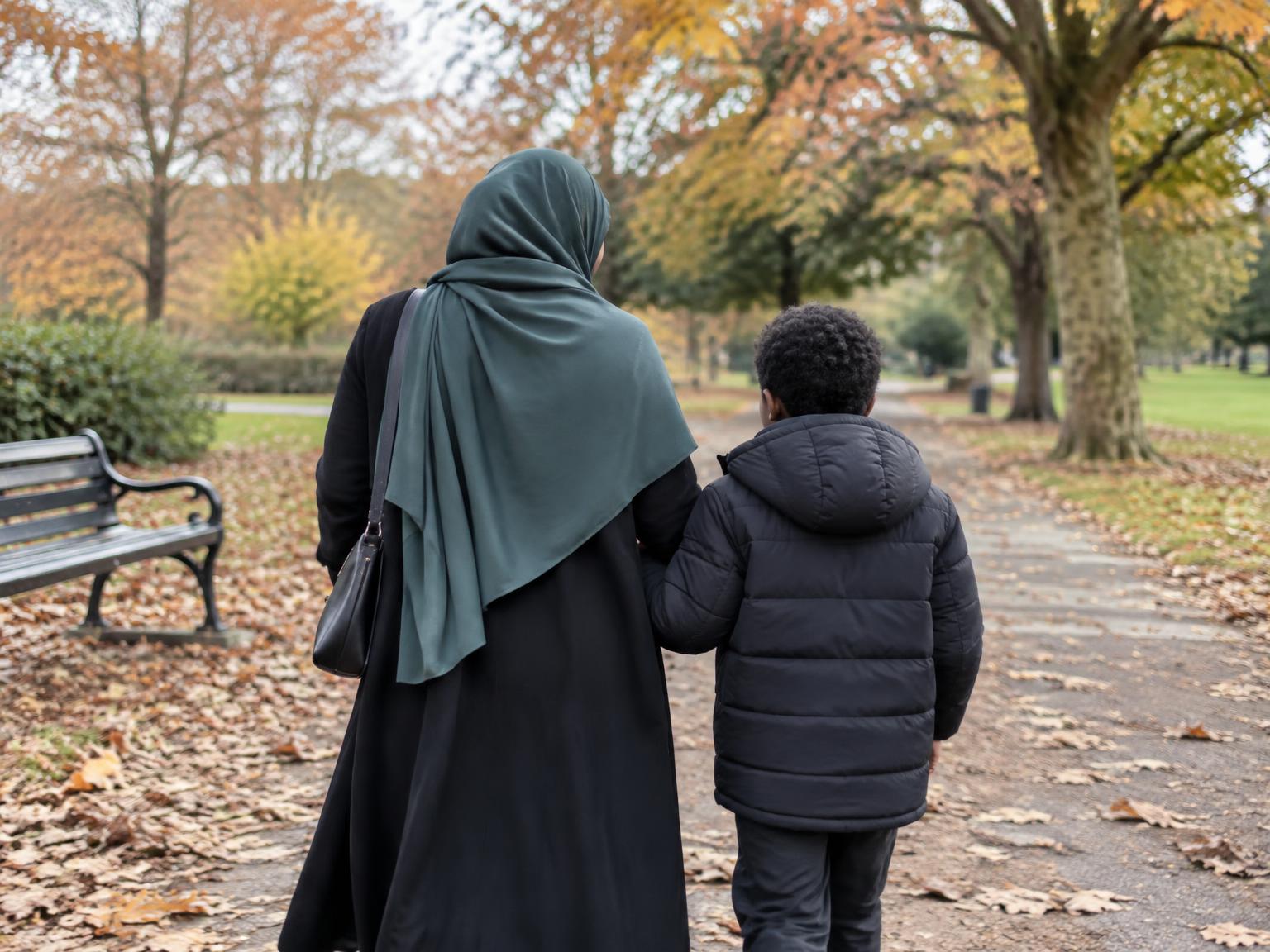
A Muslim mother and son walking together through a park, seen from behind

Understand

Children learn from what they live

They hear what we teach. They also watch how we live.

Children learn from instructions, but some of their deepest lessons happen without a lesson ever being announced.

They notice how adults speak when they’re angry. They see how Mum and Dad treat one another. They notice whether we apologise when we’re wrong. They see how often our phone has our attention. They hear how we speak about relatives, neighbours and people we disagree with. They learn what stress looks like by watching how we handle ours.

And they notice whether the values we talk about are visible in the way we actually live.

Parenting is therefore not only about managing a child’s behaviour. It is also about asking: What is my child repeatedly seeing in me?

A diverse group of Muslim parents learning together, photographed mainly from behind

Understand

Parent first, then parenting

Sometimes the first person who needs a pause is the parent.

Parenting advice can become another burden.

Be calmer. Be more patient. Communicate better. Cook healthier food. Limit screens. Spend quality time. Maintain routines. Look after yourself.

For an exhausted parent, even good advice can sound like another list of things they’re failing to do. We should not approach parents that way.

A parent who is overwhelmed, worried, sleep-deprived, under financial pressure or carrying difficulties of their own may find it much harder to respond intentionally.

That doesn’t excuse harmful behaviour. But it does mean parenting sometimes begins with noticing what is happening inside the adult.

Good parenting does not require perfect parents. Children can also learn something powerful from watching an adult recognise a mistake, take responsibility and try again.

Communicate

Communication — hearing before answering

Being heard is not the same as getting your own way.

Good communication does not mean parents and children always agree.

A child can feel heard and still be told no. A teenager can express frustration and still be expected to speak respectfully. A parent can maintain authority without turning every disagreement into a contest that someone has to win.

Sometimes we listen only long enough to prepare our response. Try listening long enough to understand.

This becomes especially important as children grow older. The relationship gradually moves from doing everything for a young child towards preparing a young person to think, choose, take responsibility and eventually live independently.

Communication has to grow with them.

A family reflection

Notice

What is actually happening?

Understand

What might be contributing?

Talk

What conversation needs to happen?

Try

What is one realistic thing we can do differently?

Reflect

What changed — even slightly?

This is a reflection framework, not a diagnostic tool. Your answers are not collected or stored.

Guide

Boundaries are part of love

A safe home needs warmth and limits.

Connection does not mean children decide everything. Children need age-appropriate boundaries because family life involves responsibility, respect and living alongside other people.

Healthy boundaries can include routines, responsibilities, privacy, technology rules, respectful communication and consequences when agreements are repeatedly broken.

But discipline should teach. Humiliation teaches something else.

Fear may produce immediate compliance, but our goal should be larger than getting a child to obey us in the next thirty seconds. We are gradually helping a human being develop judgement, responsibility and self-control.

Where possible, boundaries should therefore be clear, understandable, age-appropriate, consistent, proportionate and delivered without degrading the child.

Connection and boundaries are not opposites. A child can experience both.

Repair

When you lose your temper

What happens after the shouting matters too.

Parents lose patience. Sometimes we respond more harshly than we intended.

The answer is neither pretending it didn’t happen nor drowning in guilt. The important question becomes: What do I do next?

Repair may mean calming down, returning to the conversation, acknowledging what happened and taking responsibility for the part that belongs to us.

A parent can say: “What you did wasn’t acceptable, but I shouldn’t have spoken to you like that either.”

Those two things can both be true. Apologising for the way we behaved does not mean abandoning the original boundary. It models accountability. And accountability is something we eventually want our children to learn too.

Repair

Repair is part of family life

Healthy families are not families that never get things wrong.

People misunderstand each other. Parents make mistakes. Children make mistakes. Spouses disagree. Teenagers say things they regret.

What matters is whether the family develops a way back to one another.

Repair can involve calming down, returning, listening, acknowledging hurt, taking responsibility, apologising, changing behaviour and rebuilding trust.

Forgiveness should never be used to pressure someone to remain unsafe. Where there is abuse, coercion, violence or safeguarding concern, safety comes first and appropriate support matters.

A Muslim mother and teenage daughter in hijab talking at a kitchen table, seen from behind

Connect

Presence is different from provision

Providing for a family matters. So does being present within it.

A father may work extremely hard because he loves his children. A mother may spend an enormous amount of her life organising, caring, cooking, remembering, transporting and holding a household together.

Both may be giving everything they have. And yet a child can still be longing for connection.

Family life can become so focused on providing, organising and surviving that there is very little space left simply to be together.

Presence doesn’t require elaborate activities. Sometimes it is ten uninterrupted minutes. A conversation in the car. Cooking together. Walking somewhere. Listening without looking at the phone. Joining something your child enjoys even though it isn’t particularly interesting to you.

Where both parents are present and able to be involved, providing, organising and emotional connection should not quietly become fixed as separate jobs. Children can benefit from meaningful presence, guidance and affection from both.

The question is not only: “What am I doing for my family?” but: “How does my family experience me when I am with them?”
A father and daughter preparing a colourful meal together, seen from behind

Grow Together

Parenting is something we do together

A child should not have to experience one parent as the person who raises them and the other simply as someone who lives in the same house.

Where both mother and father are present and able to be involved, both have an important part to play.

Providing financially matters. So does being emotionally present. Nurturing matters. So does setting boundaries. Listening matters. So does guidance.

Playing, teaching, comforting, correcting, encouraging, attending important moments, knowing what is happening at school, understanding friendships, talking about difficult subjects and helping a child develop values should not automatically belong to only one parent.

Sometimes family roles develop without anybody deliberately choosing them. One parent becomes responsible for school. One handles discipline. One knows the children’s friends. One carries appointments, clothes, meals and routines. One is expected to earn. One becomes the parent children approach emotionally.

Over time, one parent can end up carrying an enormous part of family life while the other becomes less connected to the everyday experience of the child.

The aim is not to make mothers and fathers identical. It is to encourage involvement, responsibility and presence from both.

Fatherhood is more than provision

A father may work extremely hard precisely because he loves his family. Provision is meaningful. But children also need opportunities to know their father.

His time, conversation, affection, boundaries, encouragement, humour, example, faith, attention and presence can become part of how they understand themselves and the world around them. A father should not have to wait until there is a behavioural problem before becoming involved. Fatherhood happens in ordinary moments too.

Motherhood should not mean carrying everything

Mothers can quietly become the default person responsible for almost every part of a child’s life: emotional needs, school, routines, appointments, behaviour, meals, clothes, family organisation and countless things nobody notices until they stop happening.

Being a mother should not mean having to carry the entire emotional and practical weight of the family alone. Where both parents are present, shared parenting means noticing that invisible work and taking responsibility rather than merely “helping” the other parent.

This principle is not a judgement on single parents, widowed parents, separated families, parents whose partner is absent, or families where involvement is restricted. For separated parents, appropriate involvement and cooperative co-parenting may matter where it is safe and appropriate. Safety, safeguarding concerns and legal restrictions always take priority.


Both present. Both responsible. Both connected.

Understand

Parent the child in front of you

Children raised in the same home can still need different things.

Parents sometimes discover that something which worked beautifully with one child completely fails with another.

Children have different temperaments, strengths, sensitivities, experiences and developmental needs.

Fairness does not always mean responding identically. It means trying to understand what each child needs while maintaining appropriate family values and boundaries.

Avoid labels. Avoid comparing siblings unnecessarily. And be careful about turning one child’s strength into another child’s inadequacy.

Grow Together

Growing with your child

The relationship has to change as they grow.

You cannot parent a sixteen-year-old exactly as you parented a six-year-old.

Young children need significant structure and protection. As children grow, they also need increasing opportunities to think, choose, make manageable mistakes, take responsibility and develop independence.

The parent’s role does not disappear. It evolves.

The long-term goal is not permanent dependence. It is gradually preparing a young person to navigate life with character, judgement, responsibility and the confidence to seek guidance when they need it.

Communicate

The teenage years

Parenting while they are becoming their own person.

The teenage years can feel confusing from both sides.

Parents may feel a child who once told them everything is suddenly distant. Teenagers may feel their parents still see the child they used to be rather than the person they are becoming.

This stage often brings greater independence, stronger peer relationships, questions about identity, privacy, phones, school pressure, relationships, faith and the future.

Boundaries still matter. But conversation matters increasingly too.

If every difficult conversation becomes interrogation, accusation or lecture, a teenager may learn that silence feels safer. That doesn’t mean parents stop asking difficult questions. It means we work on becoming someone our young people can approach even when the conversation is uncomfortable.

A Muslim father and teenage son talking while walking through a park, seen from behind

Guide

Digital family life

Technology isn’t outside family life anymore. It is part of it.

Phones, gaming, social media and online friendships can create opportunities as well as real difficulties.

The question is not simply: “How do I get my child off the phone?” Families also need to think about what children are accessing, who they are speaking to, sleep, privacy, inappropriate content, cyberbullying, pornography exposure, gaming, social comparison, family connection and parental modelling.

Children notice adult phone habits too. A family technology conversation becomes much stronger when the rules are not presented as something that only children need.

There is no invented universal screen-time limit here. Age, needs, content, context, impact and professional advice all matter.

Grow Together

Parenting together

Two adults can love the same child and still disagree completely about parenting.

One parent may be stricter. The other may be more flexible. One may prioritise independence. Another may worry about safety. One may react immediately. Another may want to talk first.

Different strengths can complement one another. Parents do not have to behave identically or split every individual task exactly in half.

But shared parenting asks both parents, where present and able, to be meaningfully involved and responsible. It includes communicating about the children, noticing practical and emotional labour, supporting rather than undermining one another, and making important decisions together where appropriate.

Discuss disagreements away from children where possible. Work towards understandable, consistent boundaries. Protect the parent relationship from becoming purely operational. Notice if one parent has become the permanent “bad parent”, or if one has become emotionally absent.

Children should not have to carry unresolved adult conflict. The aim is not perfect agreement. It is a family in which responsibility, connection, affection, guidance and everyday knowledge of the child do not belong to only one parent.

For separated families, cooperative co-parenting may still matter where it is safe, appropriate and consistent with legal arrangements. Safety always takes priority; involvement must never be encouraged over abuse, safeguarding concerns or restrictions.

Both present. Both responsible. Both connected.
A diverse group of Muslim parents learning together, photographed mainly from behind

Communicate

Difficult conversations need safe places

Avoiding a subject doesn’t make it disappear.

Some family conversations are uncomfortable: puberty, periods, relationships, sex, pornography, bullying, mental health, self-harm, drugs and alcohol, death, grief, divorce, abuse and questions about faith.

Parents may worry that talking about something introduces the idea. Young people may stay silent because they fear anger, shame or disappointment.

Approach difficult conversations with dignity, age-appropriate information, values and appropriate professional guidance. This page cannot answer every sensitive issue. Safeguarding, medical, developmental or psychological concerns may need qualified support.

Grow Together

Family, faith & values

What kind of home are we trying to build?

Families transmit more than rules. They transmit values.

For families who want an Islamic dimension, the home can be explored through rahmah — mercy; amanah — responsibility and trust; adab — character and conduct; sabr — patience; shukr — gratitude; justice; forgiveness; service; worship; and maintaining family ties.

Raising children is an amanah and responsibility. It should not automatically be delegated entirely to the mother. Fatherhood should not be reduced only to financial provision, and motherhood should not be treated as unlimited domestic and emotional labour. Where both parents are present and able, both can help make faith visible through ordinary responsibility, mercy, example, conversation and worship.

Islamic family development asks not only what children know about Islam, but what Islam feels like within the home. Do they associate faith only with correction? Or do they also experience mercy, salah, Qur’an, gratitude, generosity, forgiveness and love of Allah?

Parents teach through instruction. They also teach through example. Cultural expectations must remain distinct from Islamic rulings. Qur’an or hadith should be added only through verified references supplied in the Islamic-content fields.

Repair

A home they can return to

Our children will make mistakes.

The aim cannot be to raise children who never fail. The aim is to help them develop enough character to recognise mistakes, take responsibility, learn and return.

A home needs boundaries. But it should also be somewhere a child knows difficult conversations can eventually happen.

Fear can hide behaviour. Relationship can create opportunities to address it.

This does not mean removing consequences. It means ensuring shame is not the only language available when something goes wrong.

The goal isn’t a home without mistakes. It’s a home where truth, responsibility and repair are possible.

Grow Together

Strong families need shared experiences

Sometimes families need less advice and more time together.

Connection isn’t built only through serious conversations. It also grows through ordinary shared experiences.

Walking. Cooking. Playing. Learning. Travelling. Being outdoors. Serving somebody together. Trying something new. Laughing. Creating memories.

Shared experiences do not have to be expensive or impressive. They create opportunities to notice one another beyond routines, correction and pressure.

A mother and father sharing a bright garden afternoon with their children, seen from behind

Ongoing family learning

Family Focus

Each published focus follows Understand → Talk → Try Together → Reflect, with one permanent address to return to or share.

The first Family Focus is being prepared

A genuine teaching will appear here only after it has been reviewed and published. The permanent family journey above remains available now.

Continue learning

Connected learning, without another library

Published family material from the existing Knowledge Hub and Courses appears here rather than being copied.

No parenting articles are currently published.

Family courses

No family courses are currently published. Browse Courses for the wider learning programme.

Browse courses

When more support is needed

Know when parenting advice isn’t enough

Sometimes a family needs more than another article. Learning can offer practical guidance. Community and spiritual support can offer belonging and perspective. Medical, developmental, psychological or safeguarding concerns may need appropriate qualified assessment and support.

Learn & Try

Practical guidance, reflection, courses and workshops.

Community & Spiritual Support

Family, community or faith-sensitive support without clinical claims.

Professional Support

Qualified people whose role and verified credentials are stated clearly.

Loading practitioners…

Safety comes first. Do not maintain contact where abuse, safeguarding concerns or legal restrictions make it unsafe. If anyone is in immediate danger, call 999. For urgent medical advice call NHS 111, or call Samaritans free on 116 123 at any hour.

You do not need a perfect family to start building a healthier one.

Notice what is happening. Understand before reacting. Connect without abandoning boundaries. Repair when things go wrong. Keep growing together.