We For You

We For Her

A space to understand yourself more deeply

Womanhood carries different seasons, emotions, responsibilities and experiences.

Sometimes we spend so much time caring, giving, adapting and carrying expectations that we rarely stop to understand what is happening within us. We For Her creates space to explore your inner world, your body, your relationships, your wellbeing, your faith and the woman you are becoming. Not through quick fixes. Through awareness, reflection, learning, support and meaningful personal work.

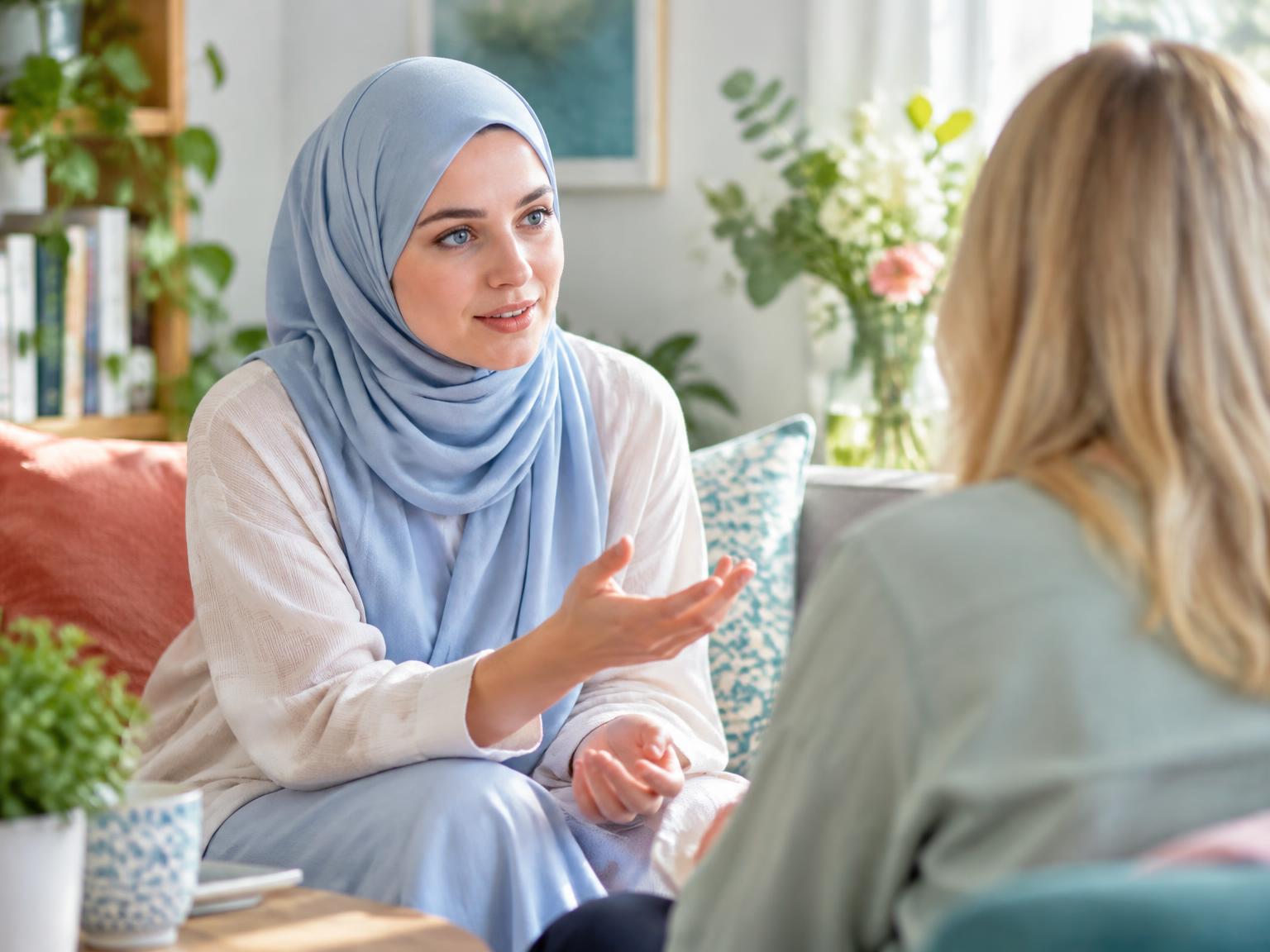
Two Muslim women in hijab speaking together beside a bright window, seen from behind

A place to pause

There is more to you than the roles you carry.

A woman may be a daughter, sister, wife, mother, professional, carer, friend or community member, but underneath those roles is still a person with her own emotional world, body, needs, experiences, strengths and vulnerabilities.

Many women become extremely good at functioning while becoming disconnected from themselves. We For Her is an invitation to slow down enough to notice.

Notice what is here

What am I feeling?

What does my body need?

What patterns keep repeating?

Where am I constantly giving?

Where do I need boundaries?

What am I carrying from the past?

What genuinely restores me?

What does my faith teach me about myself?

Where might I need help rather than trying to solve everything alone?

You don’t need to become a woman.
You need space to understand the woman you already are.

A reflective framework

Exploring femininity

Femininity is not a performance and there is no single personality a woman must adopt. Women can be gentle or direct, ambitious or quiet, independent or collaborative, and may express different qualities across different parts of life.

Where Sister Maryam uses the language of feminine energy, it is offered as a reflective self-development framework for exploring responsibility, receptivity, nurturing, confidence and relationships. It is not a medical, neurological or psychological diagnosis.

You don’t need to become a woman. You need space to understand the woman you already are.

Past and present

The things we may still be carrying

Our present experiences can be influenced by childhood, family relationships, cultural expectations, learned responses, previous relationships, difficult experiences and responsibilities assumed too early.

This is an invitation to notice patterns, not to label every difficulty as trauma. Educational reflection is not trauma therapy; qualified professional support may be the right next step when experiences continue to affect daily life.

A continuing practice

Growth is not an overnight transformation

Meaningful development can involve noticing, understanding, practising, reflecting, adjusting and continuing. Some weeks may feel transformative. Others may simply help you recognise something you had never noticed before. Both can matter.

You are not required to become permanently healed, perfectly feminine or constantly peaceful. Patience, consistency and appropriate support are part of the work.

Sister Maryam’s weekly teaching

Read. Reflect. Practise. Carry it forward

Each authored teaching offers something meaningful in a few minutes, with room to stay longer when you are ready.

The first teaching is being prepared

When Sister Maryam’s source material is ready and published, it will appear here with a permanent link and clear reflection and practice steps.

Body literacy

Your body has rhythms.

A woman’s experience is not necessarily identical every day of the month. Learning basic menstrual-cycle literacy can help someone observe her own patterns in energy, mood, symptoms and wellbeing without assuming that every woman follows the same pattern.

These phases describe a biological cycle, not a prediction of personality, emotion or productivity. Experiences vary. New, severe, persistent or worrying symptoms deserve advice from an appropriate healthcare professional.
  1. Phase 01

    Menstrual phase

    The cycle begins with menstruation. Rest, symptoms and support needs differ from one person and one cycle to another.

  2. Phase 02

    Follicular phase

    Follicles develop as the body prepares for ovulation. Notice your own experience rather than following a prescribed productivity pattern.

  3. Phase 03

    Ovulatory phase

    Ovulation is the release of an egg. Timing and symptoms vary, and not everyone notices a distinct change.

  4. Phase 04

    Luteal phase

    The phase after ovulation and before the next period. Track changes that matter to you and seek healthcare advice for concerning symptoms.

Explore body literacy more deeply

Body literacy can include tracking dates and symptoms, recognising personal patterns, making room for rest and recovery, choosing movement and food that feel appropriate, and knowing when a change deserves medical attention.

If lunar material is added later, it must be identified as reflective, spiritual or traditional practice rather than established menstrual or medical fact.

Pause and journal

What patterns are shaping your life?

You do not need to answer everything today. One honest observation can be a useful beginning.

01

When do I feel most like myself?

02

What drains me repeatedly?

03

Where am I saying yes when I mean no?

04

What does my body keep asking me to notice?

05

Which relationships leave me settled — and which leave me constantly activated?

06

Am I resting, or only stopping when I am exhausted?

07

What am I carrying because I believe I have to?

08

What experiences from my past still affect how I respond today?

Sensitive experiences

Some parts of womanhood need particular care

These subjects deserve dignity, privacy and the right kind of support. Educational material is not diagnosis, treatment, safeguarding response or crisis care.

Sisterhood

Connection without performance

You don’t have to work everything out alone. Growth can happen privately, but connection matters too. Women’s activities and gatherings will appear here only when dates are confirmed.

Faith & Fitrah

A deeper spiritual path, when you choose it

For women who want to explore development through an Islamic lens, Faith & Fitrah offers space for Qur’an, authentic Sunnah, worship, character, relationships, womanhood, responsibility, spiritual wellbeing and connection with Allah. You can also begin through wellbeing, relationships, body literacy, community or personal development. Islamic teaching remains clearly distinct from psychological and medical information.

Support

Not every difficulty is personal-development work

Personal development can help you understand and practise. Community and spiritual support can offer belonging and guidance. Professional care is the right route for clinical, therapeutic or specialist needs, provided by someone whose role and credentials are stated clearly.

Learn

Educational content and practical reflection.

Connect

Community and spiritual support, without clinical claims.

Get professional help

Verified roles with clearly stated scope and credentials.

Loading practitioners…

This is not an emergency service. If you or someone else is in immediate danger, call 999. For urgent medical advice call NHS 111, or call Samaritans free on 116 123 at any hour.